
Let’s be honest for a second. There is a specific kind of pain every frontend developer knows in SEO, but we rarely talk about it in our stand-ups.
It goes like this:
You’ve just spent two weeks on a feature. You fought with CSS Grid, you optimized your React hooks, and your Lighthouse score is finally green. You feel like a god. You hit “Deploy.”
You rush to Slack or WhatsApp to share the live link with your team (or your friends, to brag a little). Paste the URL, hit Enter, and wait for that beautiful preview card to appear.
But it doesn’t.
Instead, you get a broken image icon. Or worse, the title says “Home | React App” and the description is completely empty.
Silence.
Your feeling of god-like coding prowess evaporates. Now, instead of celebrating, you are doing the “Deployment Walk of Shame.” You have to context-switch back to the repo, find the missing meta tags, push a commit labeled “fix: seo stuff,” and wait for the entire build pipeline to run again.
All that for a title tag.
The Developer’s Double Standard
This scenario happened to us way too many times at BluDeskSoft. Eventually, sitting around with some coffee (and mild frustration), we realized we had a massive double standard in our workflow.
When it comes to JavaScript, we are militants. We have ESLint, Prettier, and TypeScript guarding our codebase. If a variable is unused? Error. If a prop is missing? Build failed.
We would never dream of shipping broken code to production.
But when it came to SEO and Page Structure? We were flying completely blind. We treated the most important part of the site, how it actually looks to Google and social media, as a chaotic afterthought.
We were building the house with precision engineering, but had forgotten to paint the front door.
The Agitation: Why “Later” Never Works
The problem with leaving SEO for “later” is that “later” usually means “when the marketing team yells at us.”
And let’s face it, fixing SEO retroactively is annoying.
- It breaks your flow.
- It creates unnecessary tickets.
- It causes friction between the dev and marketing teams.
- It creates technical debt that nobody wants to touch.
We realized that SEO shouldn’t be a marketing task. Structure is a developer task.
Enter LintPage: Scratching Our Own Itch
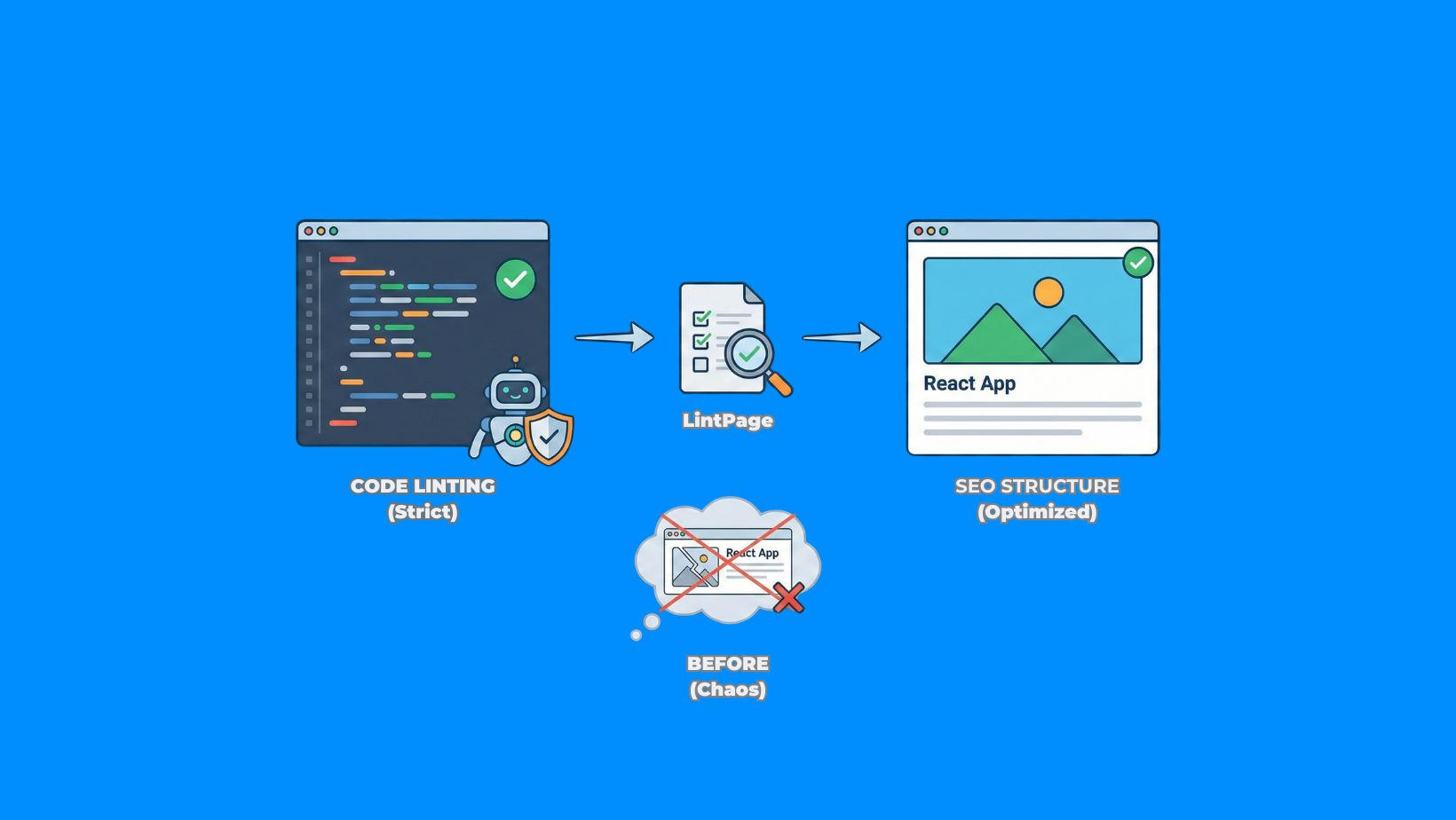
We decided we were done with the “hotfix” approach. We wanted the same discipline for our HTML head as we had for our JS body.
So, we built LintPage.
Think of it as a linter for your website’s public face. It’s a tool designed to analyze your page structure and metadata before you suffer the embarrassment of a bad deploy.
We didn’t build it to be an enterprise-bloatware suite. We built it to answer the simple questions we had during development:
- Does this link look good on Twitter/Slack? (Preview visualization).
- Is Google going to understand this page? (Structure analysis).
- Did I forget the H1 again? (Basic sanity checks).
Why You Should Care (Besides Saving Face)
LintPage is basically “Pre-Launch SEO Linting.”
It bridges the gap between “The code works” and “The product is ready.”
By using it, you solve the pain points before they happen:
- No more context switching: Catch the missing description while you are still in the code.
- Happy Marketing Team: Hand them a URL that is already optimized, so they don’t have to chase you down.
- Confidence: Deploy knowing that when you paste that link, it will look exactly as you intended.
Give It a Spin
We built this tool because we needed it. It solved a massive headache for us, and the “deployment walk of shame” is now a thing of the past in our team.
If you’re tired of pushing hotfixes for meta tags or wondering why your link previews look broken, give LintPage a try.
It’s free to check your page. And honestly, it beats waiting for the build pipeline again.